

UKI Toraja and Republic Polytechnic Singapore Explore Sustainable Agricultural Potential in Tana Toraja: From Local Commodities to Global Opportunities
- account_circle Redaksi
- calendar_month Sabtu, 6 Jun 2026
- comment 0 komentar
- print Cetak

info Atur ukuran teks artikel ini untuk mendapatkan pengalaman membaca terbaik.
Singapore, April 26, 2026
By Prof. Dr. Yusuf L. Limbongan, M.P., Prajman Evansi Pasambo, S.Hut., M.P., and Ernytha Galla, S.P., M.Si.
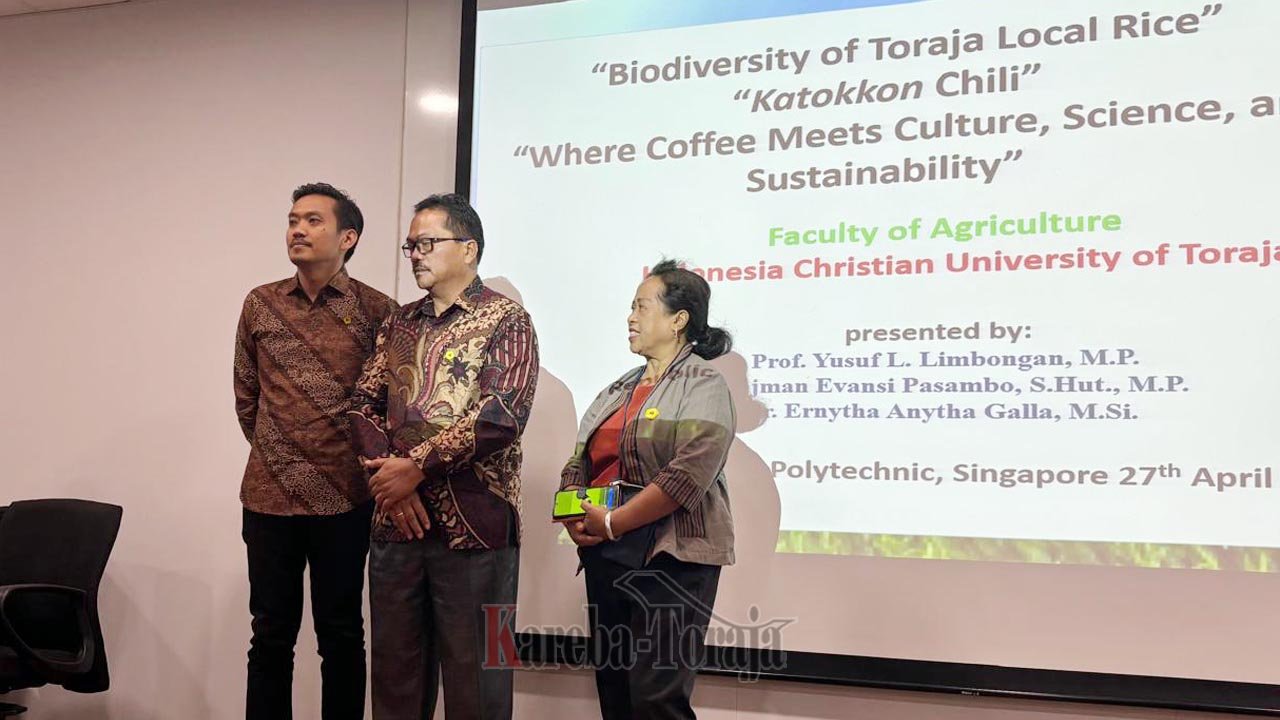
The agricultural richness of Tana Toraja, a highland region in South Sulawesi, Indonesia, is attracting growing international attention through collaborative initiatives between Universitas Kristen Indonesia (UKI) Toraja and the Agri Centre of Republic Polytechnic, Singapore. This partnership aims to explore innovative and sustainable approaches to agricultural development while promoting local commodities with strong potential for global markets.
Known for its breathtaking landscapes and cultural heritage, Tana Toraja also possesses exceptional agricultural resources. Located at elevations ranging from 600 to over 1,800 meters above sea level, the region offers ideal environmental conditions for cultivating distinctive commodities such as Katokkon chili, traditional rice varieties, and premium Arabica coffee.
One of the most iconic agricultural products of Tana Toraja is Katokkon chili, a unique local variety that thrives exclusively in highland areas between 600 and 1,500 meters above sea level. Renowned for its extraordinary pungency, reaching approximately 500,000 Scoville Heat Units, Katokkon chili ranks among the hottest chilies in the world. Despite its significant market potential, farmers continue to face challenges related to pest infestations, plant diseases, and fluctuating production caused by climate variability.
To address these issues, researchers have begun investigating innovative cultivation methods, including hydroponic systems and controlled environment agriculture. These technologies enable better management of temperature, humidity, and nutrient delivery, contributing to more stable production, improved crop quality, and increased productivity.
Beyond chili cultivation, Tana Toraja is also recognized for its rich biodiversity of traditional rice varieties. Aromatic rice, red rice, and black rice have been cultivated for generations and remain an integral part of the region’s cultural identity. These local varieties possess valuable nutritional characteristics, including high levels of protein, dietary fiber, and antioxidants. Preliminary studies have also indicated potential health benefits associated with several varieties.
However, traditional rice cultivation is often characterized by lengthy growing periods and relatively low yields. In response, researchers and agricultural experts are implementing breeding and genetic improvement programs aimed at developing superior varieties with shorter cultivation cycles and enhanced productivity while preserving their unique characteristics.
Another flagship commodity from the region is Toraja Arabica coffee, internationally acclaimed for its distinctive flavor profile and premium quality. Cultivated at elevations between 1,200 and 1,800 meters above sea level, Toraja coffee reflects the unique terroir and traditional farming knowledge passed down through generations. Efforts are currently underway to strengthen coffee quality standards and expand market access through collaboration among academic institutions, industry stakeholders, and local farming communities.
As a leading higher education institution in the region, UKI Toraja plays a strategic role in advancing agricultural innovation and community empowerment. Through its Faculty of Agriculture, particularly the Agrotechnology Study Program, the university actively conducts applied research, promotes sustainable farming practices, and introduces appropriate technologies to support local agricultural development. UKI Toraja also facilitates knowledge transfer through training programs, community outreach activities, and collaborative research involving students, academics, and local farmers.
Strengthening these efforts, UKI Toraja has established a collaborative partnership with the Agri Centre of Republic Polytechnic Singapore. The collaboration focuses on knowledge exchange, joint research initiatives, and the development of advanced agricultural technologies, including controlled environment agriculture, hydroponic systems, and smart farming solutions.
Through this international partnership, students and researchers gain valuable exposure to modern agricultural innovations and global best practices. At the same time, local farmers benefit from the adaptation and implementation of technologies specifically tailored to the unique environmental conditions of Toraja’s highlands. The collaboration significantly enhances UKI Toraja’s capacity to promote sustainable agriculture while increasing the competitiveness of local commodities in international markets.
The partnership demonstrates the critical role of agrotechnology in addressing contemporary agricultural challenges. Through innovation, research, and education, agrotechnology contributes to improved farming efficiency, enhanced product quality, environmental sustainability, and community development. It also creates opportunities for local farmers to access new knowledge and technologies that can improve livelihoods and strengthen regional economic growth.
Looking ahead, both institutions recognize significant opportunities for expanded collaboration in areas such as seed development, sustainable production systems, value-added agricultural products, technology transfer, and academic exchange programs. By fostering strong connections between academia, industry, and local communities, these initiatives have the potential to create a more resilient and globally competitive agricultural sector.
As Tana Toraja continues to develop its agricultural strengths, the integration of traditional knowledge with modern innovation will be essential. With strategic partnerships and sustained commitment to research and development, the region’s unique agricultural commodities are well-positioned to become not only drivers of economic growth but also symbols of sustainable development and cultural heritage on the global stage. (*)
- Penulis: Redaksi
- Editor: Arsyad Parende



















Saat ini belum ada komentar