

UKI Toraja, NUS, and Integral Omni Inspire Pte. Ltd. Discuss AI-Based Innovation for Agriculture and Healthcare Collaboration
- account_circle Dr. Ir. Martina Pineng, S.T., M.T. & Lantana Dioren Rumpa, S.Kom., M.T.
- calendar_month Sabtu, 23 Mei 2026
- comment 0 komentar
- print Cetak

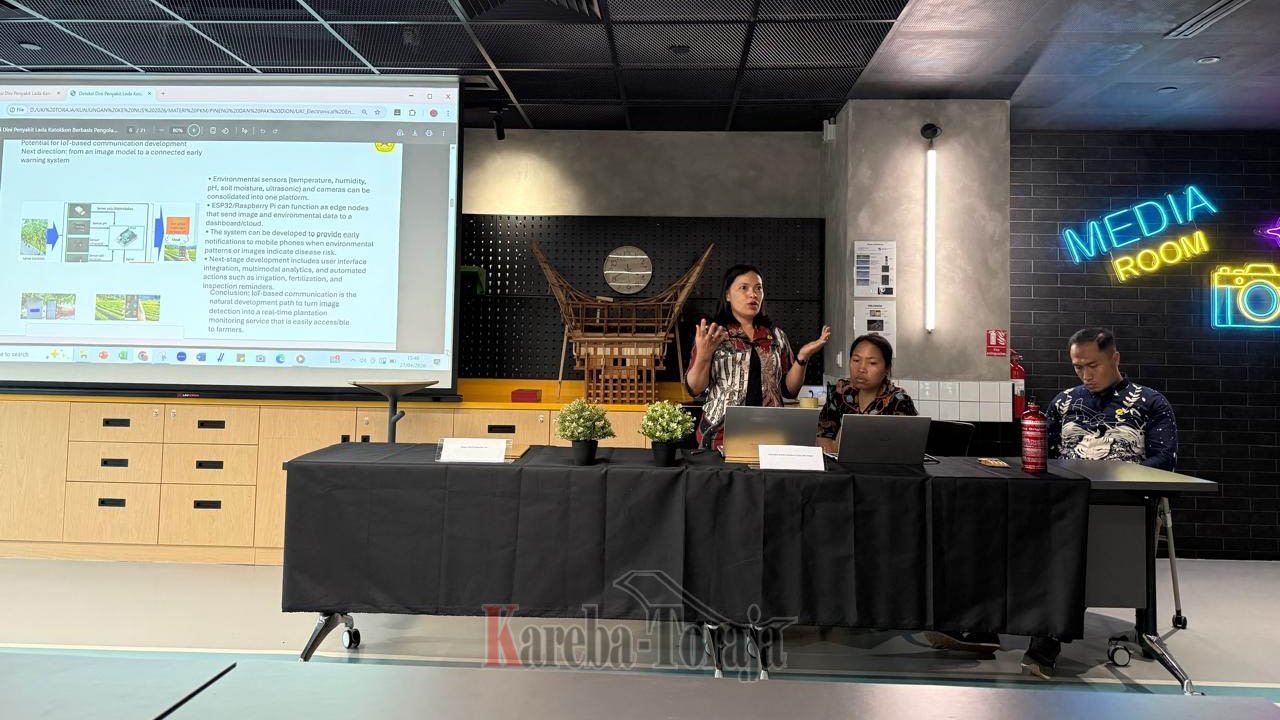
The efforts of Universitas Kristen Indonesia (UKI) Toraja in bringing local innovation to the global stage were once again demonstrated through an academic visit and benchmarking activity at the Engineering Design Innovation Centre (EDIC), National University of Singapore (NUS).
info Atur ukuran teks artikel ini untuk mendapatkan pengalaman membaca terbaik.
Singapore April 27, 2026
By: Dr. Ir. Martina Pineng, S.T., M.T. & Lantana Dioren Rumpa, S.Kom., M.T.
The efforts of Universitas Kristen Indonesia (UKI) Toraja in bringing local innovation to the global stage were once again demonstrated through an academic visit and benchmarking activity at the Engineering Design Innovation Centre (EDIC), National University of Singapore (NUS). This activity was not merely a formal visit, but a strategic momentum to present research outcomes rooted in the needs of the Toraja community while opening opportunities for international collaboration in technology.
During the visit, the UKI Toraja team engaged in direct discussions with Prof. Kok-Zuea Tang, Mr Lim Teck Sin, and the NUS research team. The discussions were dynamic, focusing on integrating advanced technologies with real-world challenges, particularly in agriculture and public health. One of the main research highlights presented was the early detection of Katokkon pepper diseases using image processing. Katokkon pepper is a high-value local commodity, but it is vulnerable to pest attacks and diseases such as fruit flies and fruit rot. Traditionally, plantation monitoring has been manual, subjective, and not real-time. This often results in delayed responses and reduced crop yield. The proposed research addresses these issues using artificial intelligence. By utilizing Convolutional Neural Networks (CNN) and YOLOv8, the system can classify fruit conditions into three categories: healthy, pest-attacked, and disease-symptomatic. The model achieves an accuracy of approximately 95%, indicating strong potential for real-world early detection applications.
Furthermore, this technology is designed to integrate with Internet of Things (IoT) systems. Environmental sensors such as temperature, humidity, soil pH, and soil moisture are combined with field cameras. The system can transmit real-time data to dashboards or mobile devices, enabling farmers to receive early warnings of potential disease risks. In addition to agriculture, UKI Toraja also presented a research roadmap in healthcare technology focused on wearable devices. The primary aim is to develop pre-diagnostic systems that can detect early health conditions before severe symptoms occur. This approach integrates sensor technology with biomedical signal processing, particularly using ECG (electrocardiogram) and GSR (Galvanic Skin Response) signals. These systems analyze physiological indicators such as Heart Rate Variability (HRV), which is closely related to the autonomic nervous system. The research is built on three main pillars: affective computing for stress monitoring, early cardiovascular detection, and non-invasive hematology for estimating metabolic parameters such as glucose and cholesterol without needles.
This visit also marked an initial step toward building synergy between UKI Toraja and NUS as a global innovation hub. NUS responded positively to the research direction, especially due to its strong focus on community needs. Potential collaborations include research internships, project-based doctoral programs, and the implementation of technologies that directly benefit local communities. For Katokkon pepper farmers, this innovation can significantly improve productivity and reduce losses. Meanwhile, wearable healthcare technology offers new access for early disease detection, particularly in areas with limited healthcare facilities. This initiative demonstrates that local innovations have the potential to compete globally when they are developed with a clear understanding of community needs. From Toraja to the world, local innovation is now paving the way for global impact. (*)
- Penulis: Dr. Ir. Martina Pineng, S.T., M.T. & Lantana Dioren Rumpa, S.Kom., M.T.
- Editor: Arthur
















Saat ini belum ada komentar